AI in Science: AlphaFold, Drug Discovery, and Materials Science
Science has always been about finding patterns in data—discovering relationships that explain natural phenomena. This pattern recognition work, once requiring decades of training and intuition, is precisely what modern AI excels at. From predicting protein structures that took years to determine experimentally, to discovering new materials with desired properties, to modeling climate systems with unprecedented accuracy, AI is accelerating scientific discovery at every frontier.
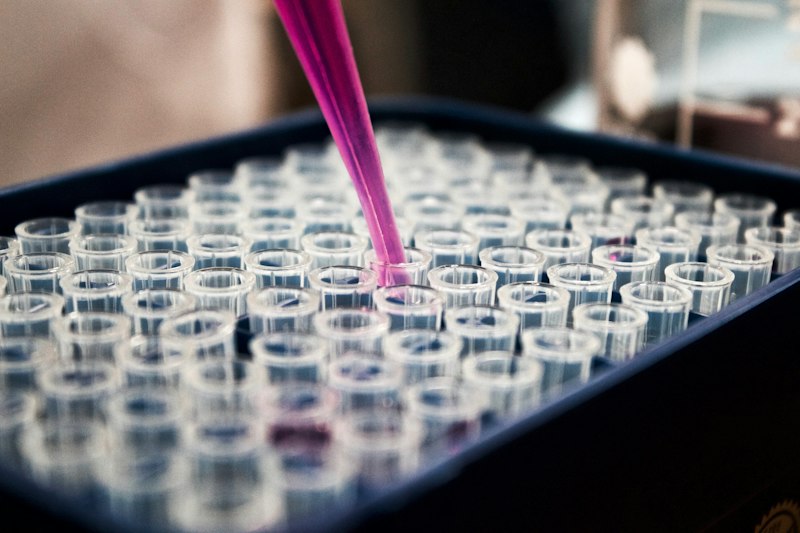
AlphaFold: Solving Biology's Grand Challenge
The prediction of protein structure from amino acid sequence was called "biology's grand challenge"—a problem that had stumped researchers for fifty years. DeepMind's AlphaFold, first demonstrated in 2020 and now in its third generation, solved it. The system predicts protein structures with accuracy comparable to experimental methods, and it has done so for over 200 million proteins—nearly every known protein in existence.
This achievement has transformed biology. What once required years of crystallography or cryo-EM imaging can now be computed in hours. Researchers investigating a novel protein can immediately visualize its likely structure, understand how mutations might affect function, and identify potential drug binding sites. The AlphaFold Protein Structure Database has become an essential tool for nearly every biology laboratory.
Beyond Structure: Function Prediction
AlphaFold's successors go beyond structure prediction to function prediction. Understanding a protein's shape is necessary but not sufficient—researchers need to know what the protein does and how it interacts with other molecules. Modern AI systems predict protein-protein interactions, enzyme function, and cellular localization, providing a comprehensive picture of protein behavior.
# Example: Using AlphaFold3 for drug discovery
from alphafold3 import AlphaFold3
import numpy as np

# Initialize the model
model = AlphaFold3()

# Predict structure and binding for a protein-drug complex
result = model.predict_complex(
    protein_sequence="MKTAYIAKQRQIS...",  # Target protein
    ligand_smiles="CC(=O)Oc1ccccc1C(=O)O",  # Aspirin-like molecule
    compute_affinity=True  # Estimate binding strength
)

# Analyze results
print(f"Predicted binding affinity: {result.affinity_kd:.2f} nM")
print(f"Binding site confidence: {result.plddt:.1f}")

# Visualize protein-ligand interactions
interactions = result.get_interactions()
for interaction in interactions:
    print(f"  {interaction.type}: {interaction.residue} <-> {interaction.ligand_atom}")
Drug Discovery Acceleration
The traditional drug discovery pipeline takes 10-15 years and costs billions of dollars. AI is compressing both timelines and costs by accelerating the earliest, most expensive stages of discovery.
Target Identification
Before designing a drug, researchers must identify what to target—typically a protein involved in a disease process. AI systems analyze genomic data, protein interaction networks, and biological pathways to identify promising drug targets. This analysis would take years manually; AI completes it in days.
Molecular Design
Once a target is identified, chemists must design molecules that interact with it effectively. AI generates novel molecules with desired properties—binding affinity, selectivity, solubility, synthesizability—much faster than traditional high-throughput screening. Systems like Relay Therapeutics' platform can explore billions of molecular variants computationally.
| Company | AI Application | Pipeline Stage | Notable Results |
|---|---|---|---|
| Insilico Medicine | Generative chemistry | Phase I | Novel fibrosis treatment designed entirely by AI |
| Exscientia | Target-drug matching | Phase II | AI-designed cancer drug in clinical trials |
| BenevolentAI | Target identification | Multiple | Identified baricitinib for COVID-19 |
| Relay Therapeutics | Motion-based design | Phase I | Allosteric cancer drug candidates |
Materials Science
Materials science involves discovering materials with specific properties—conductors that don't overheat, batteries that store more energy, catalysts that speed chemical reactions. This exploration has historically been experimental, requiring synthesis and testing of countless candidates. AI is transforming this process through computational prediction and generative design.

Property Prediction
Machine learning models trained on known materials can predict properties of novel compositions. Given a proposed material's crystal structure and elemental composition, AI estimates conductivity, stability, mechanical properties, and other characteristics—narrowing the experimental search space dramatically.
Generative Materials Design
Advanced AI systems don't just predict properties of proposed materials—they generate novel materials optimized for specific applications. Google's Graph Networks for Materials Exploration (GNoME) has discovered 2.2 million new stable materials, vastly expanding the known universe of practical materials.
Climate and Earth Science
Climate modeling requires simulating interactions between atmosphere, oceans, ice, land, and vegetation across the entire planet. Traditional climate models struggle to capture fine-grained phenomena while maintaining computational tractability. AI-enhanced models improve both resolution and accuracy.
Weather Prediction
AI weather models from Google DeepMind (GraphCast) and Huawei (Pangu-Weather) now outperform traditional numerical weather prediction models. These models predict weather patterns more accurately and orders of magnitude faster, enabling forecasts that incorporate more data and more spatial detail.
Climate Projections
While weather prediction has improved dramatically, long-term climate projections remain challenging. AI is helping by modeling feedback loops, predicting tipping points, and downscaling global projections to regional impacts. These capabilities inform policy decisions about emissions targets and adaptation strategies.
Challenges and Limitations
Despite remarkable progress, significant challenges remain:
- Data requirements: AI models require extensive training data; scientific domains with limited experimental data remain challenging
- Interpretability: Scientists need to understand why AI makes predictions; black-box predictions are difficult to trust without mechanistic understanding
- Validation: AI predictions must be experimentally verified; the gap between computational prediction and practical discovery remains significant
- Domain expertise: AI systems may miss rare but important phenomena that human experts would consider
The trajectory is clear: AI will become an increasingly essential tool for scientific discovery. The scientist of the future will work with AI systems that augment human creativity and intuition, enabling discoveries that neither humans nor AI could achieve alone. The question isn't whether AI will transform science—it already has. The question is how quickly we can harness these tools to address humanity's greatest challenges.